Chat Master!
- 4.4
- Rating
- 50.00M
- Installs
- Free
- Price
 Analysis by App-foxy
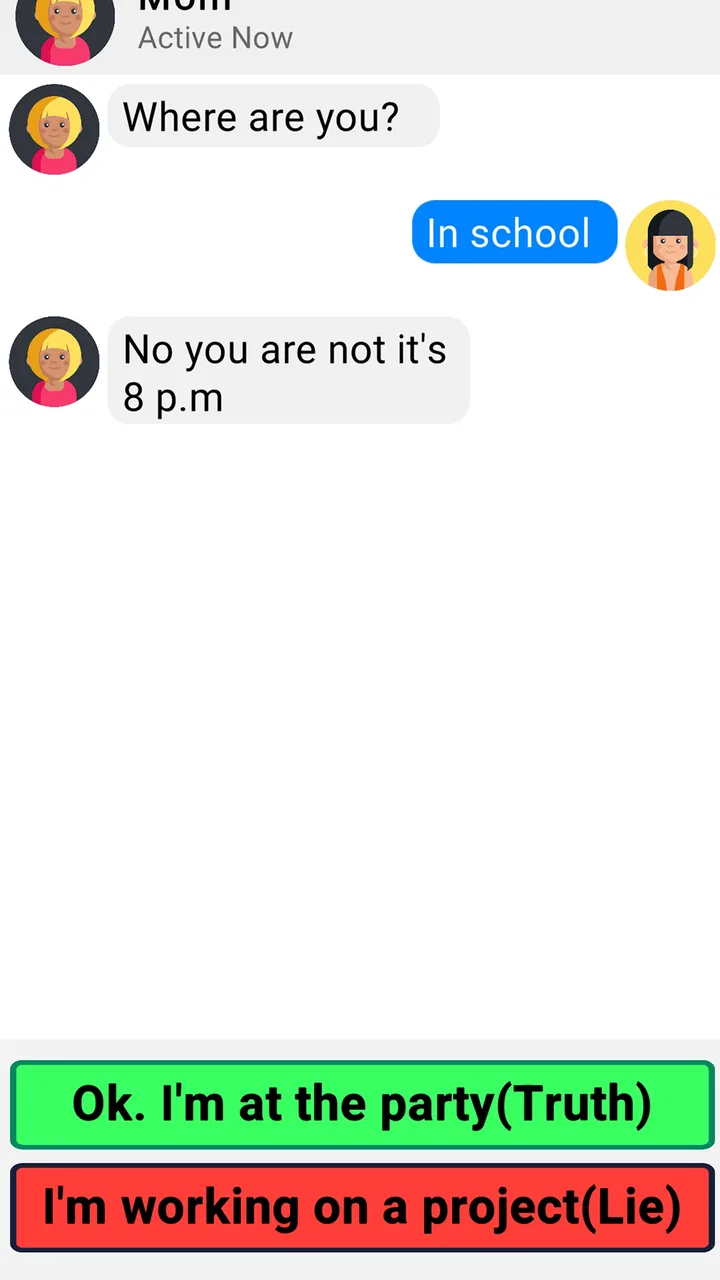
I expected a lightweight time-killer from Chat Master!, but after spending time with it, I found a game that is more about reading people and choosing the right tone than simply tapping quickly. Its central idea is easy to understand: you receive a chat situation, pick a response, and see whether your choice moves the conversation in the right direction. That makes it approachable immediately, while the social context gives each decision a little more personality than a standard reflex game.
This is a casual game from Supersonic Studios LTD, available for free and aimed at Teen players. It has attracted a large audience, with over 50 million installs and an average rating of 4.4 from around 342 thousand ratings. Those figures make sense to me because the game is easy to start, works well in short sessions, and does not demand the commitment of a traditional story-driven title.
My overall impression is positive, with an important qualification: this is best enjoyed as a quick collection of playful texting challenges, not as a serious messaging simulator. If you like choosing dialogue, spotting awkward wording, and testing how a conversation might unfold, there is plenty here to enjoy. If you want deep character development, a long continuous plot, or a completely uninterrupted experience, its casual design may feel too shallow.
You May Also Like

 Blood Strike: 2.5 Anniversary
Blood Strike’s Loadouts Turn Every Drop Into a Tactical Gamble
A close look at Blood Strike’s custom loadouts: how fast access to signature weapons reshapes its battle royale rhythm, rewards preparation, and narrows the gap between fights.

 Pandora - Music & Podcasts
Pandora’s Music Is Easy to Start, but Harder to Recover
Pandora’s strength is its low-effort path from a seed to a station. Its weak spot is how much confidence it asks you to place in connection, setup, and quiet recovery.

 8 Ball Pool
 Is Built on Rivalries, Rematches, and Routine
A close look at the rivalries, rematches, shared routines, and unanswered safety questions that turn a quick pool match into a persistent mobile community.

 Samsung Music
’s Quiet Strength Is Playing What You Already Own
Its reach comes less from spectacle than from dependable access to a personal library. That simplicity is both the app’s strongest retention engine and its ceiling.

 AccuWeather: Weather Radar
AccuWeather Review: A Quick, Clear Forecast for Everyday Decisions
For everyday plans, the best forecast is the one you can understand quickly. AccuWeather makes rain timing, radar, and local conditions easy to act on, with a few trade-offs.

 Hill Climb Racing
Why Hill Climb Racing Still Turns Crashes Into One More Run
A tiny car, a bumpy hill and one more upgrade: Hill Climb Racing keeps resurfacing because its simple chaos makes every near-miss feel personal.
More From Our News Desk
View All News


How the current version feels to play
The basic loop is deliberately simple. A conversation appears on screen, and I choose from the available replies. The game then reacts to that decision, usually making it clear whether I understood the situation. The appeal comes from the small pause before answering: a reply that sounds funny in one context can be rude, suspicious, or completely unhelpful in another.
That makes the game less about typing speed than the short summary might suggest. The real challenge is interpreting intent. I have to notice whether the other person is asking for reassurance, testing honesty, expecting an apology, or simply looking for a playful answer. The best response is not always the most dramatic one, and that gives the choices a modest but satisfying layer of judgment.
The format also suits the way many people use mobile games. I can play a little while waiting for food, during a short break, or when I want something that does not require remembering a complicated control scheme. There is no need to build a team, learn a map, or keep a long chain of objectives in mind. I open it, deal with a few conversations, and stop when I am ready.
That convenience is also the main reason I would recommend it to someone who rarely plays games. The interface is built around familiar messaging behavior, so the learning curve is almost nonexistent. Even someone who normally avoids action games or puzzle games can understand what is happening within moments.
Still, the simplicity means the experience depends heavily on whether the individual scenarios amuse you. When a conversation feels recognizable, the choice is enjoyable because I can imagine how a real person might respond. When a situation feels too obvious, the result is closer to tapping through a small joke than solving a meaningful problem.
Why the texting theme works
Text conversations are naturally compact, and the game uses that compactness well. A few words can change the mood of an exchange, so the player gets immediate feedback from a very small decision. That is more effective than it sounds. I often found myself rereading the options, not because the controls were difficult, but because one word could make an answer sound supportive instead of dismissive.
This also gives the game a useful social-reading quality. It does not teach communication in any formal sense, and I would not treat its outcomes as rules for real relationships. However, it encourages a habit that is valuable outside the game: consider how a message may be received rather than focusing only on what you meant.
A realistic everyday use case is a short commute. I can play a few scenarios without needing sound, a stable group of friends, or a large amount of free time. The game feels particularly suitable for those moments when a conventional video game is too demanding but scrolling through social media feels repetitive.
Small decisions that reward a second look
One of the less obvious strengths is that I do not always benefit from choosing the funniest or most confident reply. Some situations reward restraint. A calm answer can be more effective than an exaggerated one, while an overly clever message may create a new problem. I started treating the choices as tone-matching exercises rather than guessing which line sounded most entertaining.
My practical tip is to read the message before looking at the answers. That sounds minor, but it prevents the options from steering my interpretation too early. I also try to identify the emotional purpose of the exchange first: is the character trying to repair trust, avoid embarrassment, get information, or provoke a reaction? That approach makes the decisions feel less random.
Another useful habit is accepting that a failed choice can still be informative. Instead of immediately rushing through the next attempt, I look at what made the selected reply unsuitable. Sometimes the problem is the wording; sometimes it is the timing or the attitude behind it. This turns a quick mistake into a small lesson about how the scenario is framed.
What has changed and what that means for players
The current release is version 4.6, following the game’s original launch on October 12, 2020. That history matters because it shows this is not a brand-new experiment still searching for its identity. The core concept has had time to settle, and the present version feels like an established casual experience rather than a rough first attempt.
I would be careful, however, about treating the version number as proof of a complete redesign. The most visible identity remains the same: short chat-based choices built around social situations. For a returning player, that continuity is reassuring because the game does not appear to be abandoning the idea that made it recognizable in the first place.
For someone installing it now, the practical benefit is familiarity. The game has a clear purpose from the first interaction, and its mature presence on mobile is reflected in the broad audience it has reached. It is not necessary to understand a complicated backstory or study a manual before deciding whether it suits you.
The trade-off is that long-time players may want more than a polished version of the same basic loop. If you have already played many similar scenarios, the novelty can fade. The game’s evolution appears most meaningful when it improves the reliability and presentation of the existing format, not when it transforms the experience into something deeper or more ambitious.
I also appreciate that the free entry point lowers the risk of trying it. You can see whether the style of humor, pacing, and decision-making appeals to you before spending anything. In-app purchases are listed at $2.99 per item, so I would approach them as optional additions rather than part of the reason to install the game. The sensible approach is to play enough of the free experience to decide whether the extra content genuinely adds value for your habits.
How existing users may experience the update
For a returning player, the most important question is whether the game still feels recognizable. In my view, yes. The appeal remains the quick feedback from a message choice, and that makes it easy to return after a break. You do not need to reconstruct a complex strategy or remember a detailed narrative thread.
That same accessibility can make progress feel less significant than it would in a larger game. A returning player looking for new systems, stronger long-term goals, or a more substantial sense of achievement may find the experience familiar rather than renewed. I see this as a game to revisit in bursts, not one that needs to become a daily obligation.
The age rating of Teen is worth keeping in mind when deciding whether to install it for a younger player. The texting format can involve social situations and themes that are more appropriate for teenagers than very young children. Parents should judge the tone for themselves instead of assuming that a casual presentation automatically means child-focused content.
The minimum operating system requirement is Android 7.1, which makes the game accessible to a fairly broad range of Android devices. That is useful if you are using an older phone, although the actual comfort of play will still depend on the device’s screen, performance, and how much background activity it handles. I would keep expectations realistic on aging hardware: a compatible operating system does not guarantee the same smoothness as a newer phone.
Where it stands beside other casual games
Compared with a match-three game, this title asks for more interpretation and less pattern recognition. You are not mainly arranging colors or planning a board several moves ahead; you are deciding how a person should respond. Compared with an endless runner, it is slower and more thoughtful, with almost no need for reflexes. Compared with a visual novel, it is lighter and more fragmented, because the conversations are designed for short encounters rather than a sustained dramatic arc.
That position makes it a good alternative when you want the feeling of making choices without committing to a long narrative game. It is also more socially recognizable than many casual puzzles, which can make the humor land quickly. On the other hand, someone who prefers clear skill progression may be happier with a puzzle game that provides increasingly difficult mechanics, while someone who wants emotional investment may prefer a story game with recurring characters and consequences.
I would also not choose it as a substitute for a real messaging app. It borrows the appearance and rhythm of texting, but its purpose is entertainment. The responses are selected within a designed scenario, so they cannot reproduce the unpredictability, responsibility, and nuance of communicating with a real person.
Limitations that become clearer over time
The biggest limitation is repetition in the core interaction. Once I understood how the scenarios were structured, some choices became easier to predict. The game remains pleasant for short sessions, but the same strength that makes it instantly accessible can reduce its staying power for players who want constant mechanical variety.
There is also a difference between recognizing the intended answer and expressing your own personality. In real life, I might write a response that is neither the safest nor the funniest option shown on screen. Here, I am selecting from the game’s interpretation of the situation. That can be entertaining, but it limits the feeling of genuine authorship.
The game is therefore not ideal for players who want open-ended writing. If your favorite part of interactive fiction is composing your own dialogue, these fixed choices may feel restrictive. It is better suited to people who enjoy evaluating options and seeing immediate consequences than to people who want complete creative control.
The free model also deserves a little attention. A free download is convenient, but optional purchases can affect how a player evaluates the overall value. I would avoid buying anything impulsively during the first session. Play when you are relaxed, decide whether the scenarios remain enjoyable after the initial novelty, and only then consider whether an individual purchase is worthwhile.
Another limitation is that the game’s social lessons should not be taken too literally. A response that succeeds in a fictional setup may not work with a friend, partner, colleague, or family member. Context, history, and tone of voice matter enormously in real communication. I enjoy the game as a prompt to think about wording, not as a handbook for handling people.
Who should install it, and who should skip it
I recommend it to casual players who like quick decisions, chat-style humor, and situations that can be understood without preparation. It is especially suitable for someone who wants a game that can be played in small pieces and does not require fast fingers. Teen players may also appreciate the familiar messaging format, provided the content fits their family’s expectations.
I would skip it if you need a substantial campaign, competitive depth, or a strong sense of progression. It is also a poor match for anyone who dislikes choice-based humor or becomes frustrated when the “best” answer depends on the game’s intended tone rather than personal preference.
For people who are unsure, my advice is simple: treat the first session as a test of the format. Pay attention to whether you enjoy reading the situation before choosing, not merely whether the first few jokes make you smile. If the act of weighing tone feels satisfying, the game can become a reliable short-break companion. If the choices feel obvious immediately, a more mechanically varied casual game will probably serve you better.
What I would watch in future updates
The most valuable direction would be greater variety without losing the quick pace. I would like future development to make the conversations feel less predictable, perhaps through more nuanced situations or choices where several replies are reasonable for different reasons. That would preserve the accessible format while giving experienced players more to think about.
I would also watch how the developer balances returning users with first-time players. New players benefit from clarity and immediate feedback, while established players need fresh situations that do not simply repeat familiar patterns. The best update would serve both groups by keeping the controls simple and making the interpretation more interesting.
Another point worth watching is the role of optional purchases. The free entry point is one of the game’s strongest practical advantages, so the experience should continue to feel worthwhile before a player considers spending money. Clear value matters more here than adding pressure, because the game’s appeal depends on relaxed, low-commitment sessions.
Finally, I would like to see continued attention to compatibility and presentation as the game evolves. With a minimum requirement of Android 7.1, it can reach users on older devices, and maintaining that accessibility would help preserve its usefulness as a casual option. At the same time, newer phones should benefit from a polished experience rather than merely running the same basic interaction.
After trying it, I see Chat Master! as a charming, limited, and easy-to-recommend casual game when its limits match your expectations. It turns ordinary texting situations into quick judgment calls, and I enjoy the way a small wording difference can change the apparent mood of a conversation. Its free price makes experimentation easy, while the current version shows a product that has remained focused since its 2020 release.
My final advice is to approach it as a pocket-sized social puzzle, not a full messaging world. Read carefully, think about tone, and do not assume the funniest answer is automatically the best one. If that style sounds appealing, Supersonic Studios LTD has created a convenient game for short breaks and light entertainment. If you need deep stories or lasting challenge, choose another casual title instead.
FAQs for Chat Master!
01What is the main objective of Chat Master!?
Chat Master! is a simulation game where the main aim is to navigate through different chat scenarios. Players are tasked with making the right choices to successfully complete various chat-based challenges, helping them progress through levels while improving their decision-making skills in simulated conversations.
02Is Chat Master! free to play, or are there in-app purchases?
Chat Master! is free to download and play, but it does offer in-app purchases. These can enhance the gaming experience by providing additional hints or unlocking certain features more quickly. However, players can enjoy most of the game’s content without spending any money.
03What are some key features of Chat Master!?
Chat Master! features a variety of chat scenarios that simulate real-life conversations. The game includes multiple levels with different challenges, requiring players to make choices that affect the outcome. Its simple interface and engaging gameplay make it accessible and entertaining for players of all ages.
04Can Chat Master! be played offline?
Yes, Chat Master! can be played offline. This makes it a convenient option for users who want to enjoy the game without relying on a stable internet connection. However, some features, such as in-app purchases or updates, may require an internet connection.
05Is Chat Master! suitable for all age groups?
Chat Master! is designed to be suitable for a wide range of age groups. Its content is generally appropriate for teens and adults, with scenarios that are engaging yet straightforward. Parents are encouraged to review the game to ensure it aligns with their expectations for younger players.
Pros
- Engaging mini-games enhance interaction.
- Simple interface suitable for all ages.
- Requires no internet connection to play.
- Regular updates with new content.
- Improves quick thinking and decision-making.
Cons
- Repetitive scenarios can become tedious.
- In-app ads interrupt gameplay experience.
- Limited customization options available.
- Some levels lack sufficient challenge.
- Occasional bugs affect smooth operation.

Chat Master!
Gallery